

Have you ever picked up a food product, surprised that it had no sugar in it? Maybe you felt quite excited that you’ve finally found a ‘sweet treat’ that’s a little bit healthier than usual?
Many products these days are using sweeteners as a replacement for sugar, this can be seen as a good step in the right direction, as we know we should all be eating less sugar.
However, even though sweeteners are in a lot of products, can we assume that means they are healthy for us?
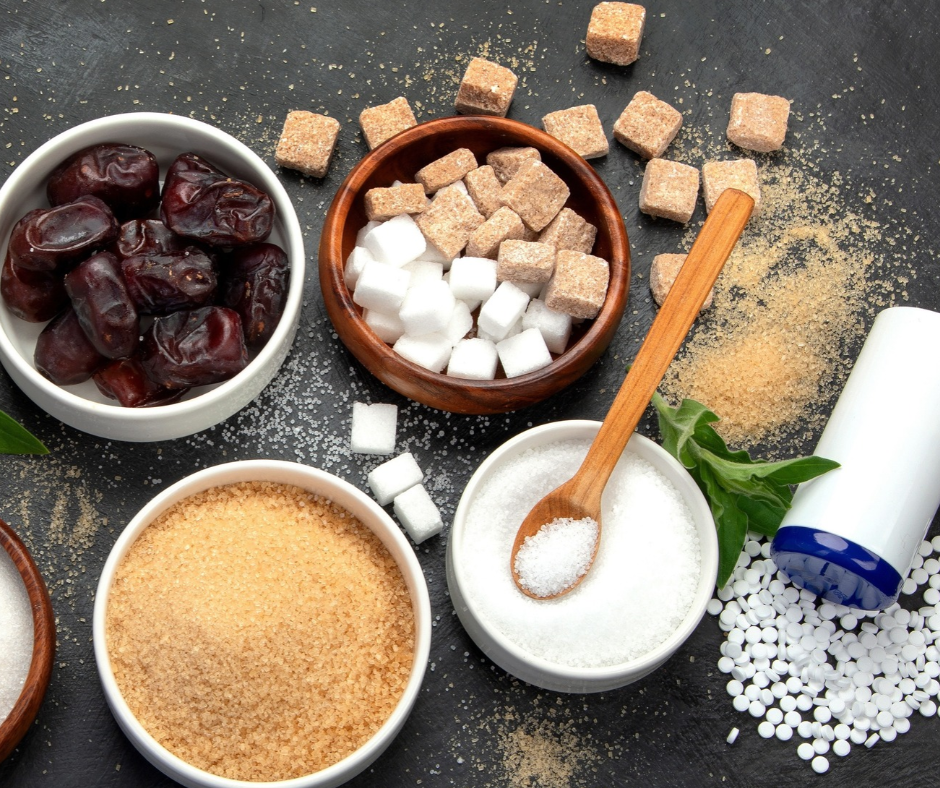
Let’s dive into how our Re-Shape team approaches sweeteners.
What are sweeteners and where are they found?
Sweeteners are additives used to enhance a food’s sweetness, often used to replace sugar. They are usually found in food and drink such as soft drinks, desserts, dairy products, sweets, chewing gum and low calorie/diet products.
What are the most common sweeteners?
There are many types of sweeteners, and they are often grouped in different ways. In this blog, we will focus on the most common sweeteners you will find in your food.
High-intensity artificial sweeteners:
These are often referred to as non-nutritive sweeteners or ‘low calorie’ sweeteners, as they have no nutritional value. This makes them a convenient choice for reducing your carbohydrate and calorie intake.
Examples you may see: Acesulfame K (E950), Aspartame (E951), Sucralose (E955), Saccharin (E954), Cyclamate (E952) and more.
High intensity natural sweeteners:
Like the artificial sweeteners mentioned before, these are non-nutritive (non-nutritional value) but are naturally derived from plants. Often, these sweeteners are marketed as being more ‘natural’, even though they have been processed.
Examples you may see: Stevia (often labelled as steviol glycosides) and Monk Fruit Extract.
Sugar alcohols:
Also known as polyols, they are a type of nutritive sweetener, which means they contain carbohydrates and calories, but fewer than sugar. For people with diabetes, this can mean a smaller effect on blood glucose levels, however for those taking insulin, it’s important you consult with your healthcare team before consuming them.
Polyols are either artificially created or occur naturally in many fruits and vegetables such as apples, prunes, dried apricots and dates.
Consuming large amounts of polyols (artificial or natural) can cause a laxative effect, often leading to unpleasant symptoms such as bloating, flatulence and diarrhoea.
Examples you may see: Erythritol (E968), Isomalt (E953), Maltitol (E965), Mannitol (E421), Sorbitol (E420) and Xylitol (E957).
Should we be concerned about sweeteners?
In the UK, sweeteners used in foods undergo safety assessments and are approved for use by food safety authorities, with acceptable daily intake levels established.
Only those with phenylketonuria are advised to avoid aspartame containing sweeteners.
Current UK guidance recommends minimising intake of non-sugar sweeteners and sugar.
In 2023, the World Health Organisation advised against replacing free sugars with sweeteners for weight control, as current evidence does not support sustained long-term benefits.
It’s a personal choice as to whether you choose to consume sweeteners or which one you consume. It all comes down to how they fit into your individual goals for healthy eating.
What does the Re-Shape team recommend?
Here at Re-Shape, we’re here to support you, whichever choice you make.
Our programme encourages the consumption of minimally processed foods where possible, to support your weight management journey. We also know the key to sustainable habits is flexibility and food freedom – not restriction.
When it comes to choosing Team Sugar or Team Sweeteners, we like to take a different approach, one that focuses on reducing our reliance on sweet tastes, rather than swapping sugar for something else.
Research in behavioural psychology suggests that replacing an unwanted habit with a healthier alternative may be more effective than complete avoidance.
We recommend reducing sugar intake as a long-term goal and using sweeteners as a helpful stepping stone.
Many packaged foods are designed to encourage us to keep eating them, use the tips below to help you enjoy your favourite foods in moderation, while helping you towards your goals:
- Switch to the diet version when consuming soft drinks.
- Try herbal teas instead of drinking juice and soft drinks every day.
- Have one designated night a week for consuming a soft drink of your choice and take the time to savour and enjoy it.
- Gradually dilute soft drinks with soda water to reduce the overall sweetness. This works best for drinks like lemonade or ginger beer.
- Choose the lower sugar version of a product most of the time. For example, choose the no added sugar beans when cooking at home and save the full sugar version for when you’re going out to eat.
- Change the meals you eat and opt for more whole foods rather than packaged and processed products. For example, swap breakfast cereal to Greek yogurt and berries.
- Reduce the portion size or frequency of added sugar. For example, measure the sugar you add to your tea and gradually reduce it week by week.
- Buy smaller, pre-portioned snacks or serve a portion in a bowl, rather than eating straight from the packet.
- Make a homemade dessert instead of a shop-bought one. Experiment with reducing the sugar by at least 25% or use bananas and dates instead of sugar, to add nutrition.
- Have a fruit-based dessert instead of cake, chocolate or biscuits. Choosing a fruit that you really enjoy may help to make this habit more appealing.
- Small amounts of dark chocolate can be a regular part of a healthy balanced diet. If you’re used to milk chocolate, try gradually increasing the cocoa content up to 70%. It’s a lot richer, so you may find it difficult to overconsume.
- Ask yourself if you’re genuinely hungry, thirsty or craving comfort. Could you choose a different option that isn’t something sweet, perhaps eating more protein, having a drink of water or finding a hobby that relaxes you?
If we frequently consume very sweet foods, it strengthens our preference for sweet tastes and can make healthier options seem less appealing.
The good news is, our taste buds can change.
Making consistent and gradual reductions to your sugar and sweetener intake may help reduce your preference for very sweet foods over time and support your overall health.
References:
Sugar, sweeteners and diabetes | Diabetes UK
The truth about sweeteners – NHS
Low or no calorie sweeteners deemed safe in new position statement – BDA
Diet and diabetes: how can I eat healthily? – BHF
Sweeteners Guide: Classification and Sweetness Comparison | Niran Bio
WHO advises not to use non-sugar sweeteners for weight control in newly released guideline