

Did you know that your comfort-food classic of a baked potato with cheese and beans is a great way to get more plant-based protein in your diet? It’s likely you’ve unknowingly been eating beans and pulses your whole life, let’s talk about why this is great news for your health and your wallet!
What are beans, pulses and legumes?
Legumes is an umbrella term for all types of beans, pulses and peas in the Fabaceae family. Pulses are a type of legume that refer to the edible dried seeds. Then we have beans, which are a type of pulse.
Legumes:
- Dry/fresh beans and soybeans
- Dry/fresh peas
- Lentils
- Chickpeas
- Peanuts
Pulses:
- Dry beans
- Dry peas
- Chickpeas
- Lentils
Beans:
- Pinto beans
- Kidney beans
- Mung beans
- Black eyed peas
- Cannellini beans
- Black beans
- Adzuki beans
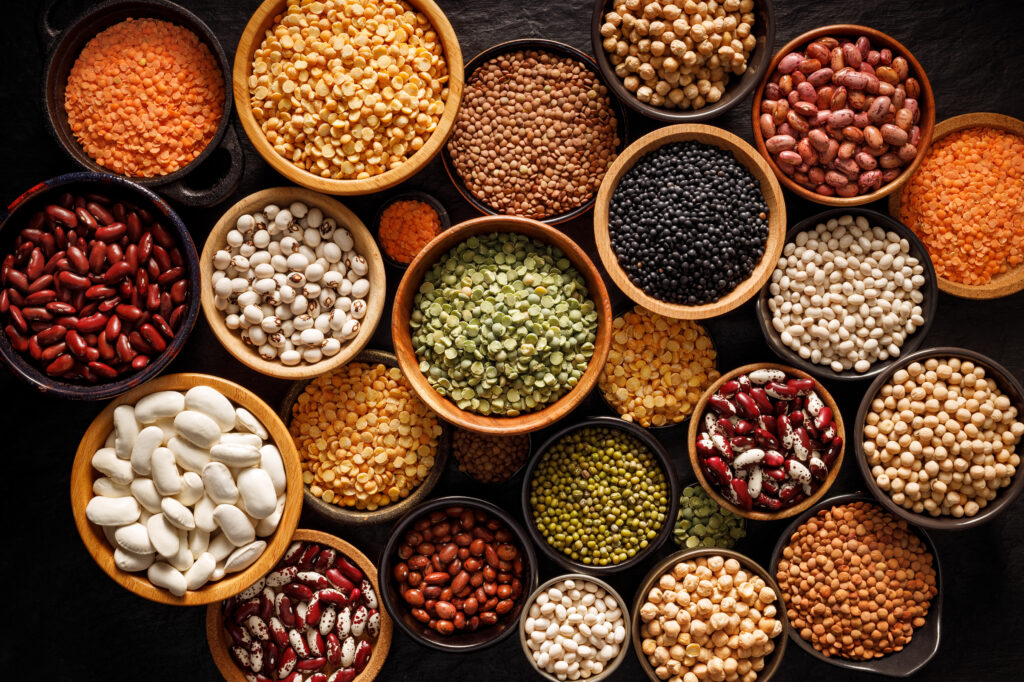
What are the benefits of eating more legumes?
Not only are legumes naturally low in salt, but they’re also a great way of reducing your overall fat consumption. They’re also high in protein and fibre, which helps keep us fuller for longer, a great tool for those on a weight management journey.
How much protein do they provide?
Some legumes are higher in protein than others. Soybeans and lupin beans offer the most protein, closely followed by lentils, fava beans and mung beans. Here’s the protein of some common legumes…
- Protein per 172 g cup of Soybeans (cooked): 31.3 g
- Protein per 198 g cup of Lentils (cooked): 17.9 g
- Protein per 177 g cup of Borlotti Beans (cooked): 16.5 g
- Protein per 177 g cup of Red Kidney Beans (cooked): 15.3 g
- Protein per 172 g cup of Black Beans (cooked): 15.2 g
- Protein per 164 g cup of Chickpeas (cooked): 14.5 g
For those who are Vegetarian or Vegan, it’s important to consume a wide variety of plant proteins across the day to ensure you are getting all the amino acids your body needs. Eating a diet with plenty of different legumes, nuts, seeds and wholegrains will support this.
How much fibre do they provide?
Having fibre in our daily food intake is important for our digestion, hormone and heart health. Adults need 30g fibre every day. Let’s compare how different legumes rank in terms of fibre:
- Fibre per ½ cup of Red Kidney Beans (cooked): 7.9g
- Fibre per ½ cup of Black Beans and Pinto Beans (cooked): 6.1g
- Fibre per ½ cup of Lentils (cooked): 5.2g
- Fibre per ½ cup of Chickpeas and Lima beans (cooked): 4.3g
Are dried beans better value than canned?
Cooking your own beans often works out cheaper overall, due to lower production and processing costs for the manufacturer. Cooking them fresh may also yield a better texture and contain less additives. If you can store it, buying in bulk can save more money. Generally, more popular legumes such as lentils, chickpeas and kidney beans are often the cheapest to buy. When cooking dry legumes, check the packaging on how to cook them, you may have to soak them overnight.
How can you add more beans to your diet?
- Adding chickpeas to curries
- Adding lentils to bolognaise, stews, lasagne or Shepard’s pie
- Add kidney beans or mixed beans to chilli
- Add beans to salads
- Add beans or lentils to your soups
- Add kidney beans to your fajitas
- Buy a different tin each week and try out a new recipe
- Try preflavored pouches of lentils, beans and pulses
- Mix lentils into your rice
Quick pulse-based meals and snacks
- Hummus with wholegrain crackers or carrots
- Mexican black bean burritos
- Bean burgers
- Lentil and bean chilli
- Chana dal or lentil dal
- Crispy roasted chickpeas
- Baked potato with low sugar and salt beans
- Shakshuka with chickpeas